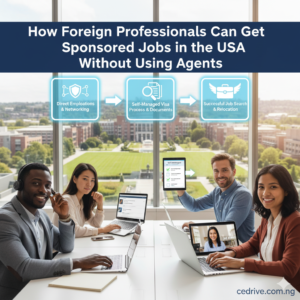
How Foreign Professionals Can Get Sponsored Jobs in the United States Without Using Agents
How Foreign Professionals Can Get Sponsored Jobs in the United States Without Using Agents
Many foreign professionals want to work in the United States because of better pay, global exposure, and access to advanced industries. However, confusion about visa sponsorship often pushes people toward agents who promise fast results. These promises usually lead to wasted money, false hope, or even immigration trouble.
The reality is straightforward. Foreign professionals can secure sponsored jobs in the USA without agents by learning how the hiring system works and applying the right strategies. US employers hire international talent every year without intermediaries. They look for skills, experience, and cultural fit, not agent referrals.
This in depth guide explains how foreign professionals can find sponsored jobs in the USA on their own. It covers visa pathways, industries that sponsor foreign workers, employer expectations, job search strategies, resume standards, networking techniques, interview preparation, and long term career planning.
What Job Sponsorship Means in the United States
Job sponsorship happens when a US employer hires a foreign professional and agrees to support a work visa or permanent residence process. The employer files legal documents and pays required government and legal fees. Immigration lawyers manage the paperwork.
Sponsorship does not guarantee permanent residence or job security. It allows legal employment under specific conditions. Employers sponsor workers only when they see business value.
Important facts to understand
US employers sponsor skills, not nationality
Agents do not control visa approvals
Sponsorship depends on company needs
Legal processes follow strict rules
Once professionals understand these basics, they can approach the job search with clarity and confidence.
Visa Options That Allow Employer Sponsorship
Foreign professionals can work in the USA through several employer sponsored visa categories. Each visa suits different career profiles.
H1B Visa for Skilled Professionals
The H1B visa remains the most popular route for foreign professionals.
Key eligibility factors
A job that requires specialized knowledge
A bachelor degree or higher
A sponsoring employer
Common H1B occupations
Software development
Information technology
Engineering
Finance
Business analysis
Although the visa has an annual quota, many companies still hire foreign professionals because demand remains high.
L1 Visa for Company Transfers
The L1 visa supports employees of multinational companies.
Basic requirements
At least one year of employment outside the USA
Transfer to a US office
Managerial or specialized knowledge role
This visa avoids the H1B lottery and suits professionals already working for global organizations.
O1 Visa for High Achievers
The O1 visa supports individuals with extraordinary ability.
Evidence may include
Awards
Published work
High salary history
Industry recognition
Leadership roles
This visa fits professionals who demonstrate consistent excellence.
Employment Based Green Cards
Some employers sponsor permanent residence directly.
Common categories
EB2 for advanced degree holders
EB3 for skilled professionals
This option offers long term stability and career growth.
Industries That Regularly Sponsor Foreign Professionals
Certain industries rely heavily on global talent.
Technology Sector
Technology companies lead sponsorship efforts.
Roles include
Software engineers
Cloud architects
Cybersecurity specialists
Data scientists
AI engineers
Skills matter more than nationality in this sector.
Engineering Fields
Engineering roles remain critical to infrastructure and innovation.
Examples include
Mechanical engineering
Electrical engineering
Civil engineering
Energy and petroleum engineering
Employers sponsor engineers when shortages exist.
Healthcare and Life Sciences
Healthcare organizations recruit internationally.
Roles include
Nurses
Medical technologists
Clinical researchers
Pharmacists
Licensing and exams may apply.
Finance and Consulting
Some firms sponsor foreign professionals with strong expertise.
Examples include
Management consulting
Financial modeling
Risk analysis
Supply chain strategy
Top academic and professional backgrounds improve chances.
Education and Research
Universities sponsor foreign professionals frequently.
Examples include
Professors
Researchers
Postdoctoral fellows
These institutions often use flexible visa categories.
Why Agents Are Not Necessary
Agents do not control hiring decisions or immigration approvals. Most US companies do not use third party agents for recruiting foreign professionals.
Reasons agents create problems
They charge illegal placement fees
They promise guaranteed sponsorship
They submit applications without transparency
They expose candidates to fraud
Legitimate US employers hire directly and communicate openly.
Preparing Yourself for the US Job Market
Success starts with preparation.
Creating a US Standard Resume
A US resume focuses on results and impact.
Resume best practices
Limit length to one or two pages
Highlight achievements using numbers
Use clear action verbs
Customize for each role
Avoid personal details
A strong resume increases interview opportunities.
Building In Demand Skills
Employers sponsor professionals with scarce skills.
High demand skills include
Cloud computing
Data analytics
Cybersecurity
Automation
Supply chain optimization
Continuous learning improves competitiveness.
Improving English Communication
Clear communication matters in US workplaces.
Ways to improve
Practice professional writing
Join speaking groups
Prepare interview answers
Engage in industry discussions
Confidence grows with practice.
Finding Sponsorship Friendly Employers
Not every employer sponsors visas. Smart targeting saves time.
Researching Employers That Sponsor
Ways to identify sponsorship friendly companies
Company career pages
LinkedIn job listings
Public visa sponsorship databases
Employee testimonials
Look for employers with a history of hiring international talent.
Applying Through Official Channels
Always apply through verified sources.
Trusted platforms include
Company websites
LinkedIn Jobs
Indeed
Glassdoor
Avoid job offers that request payment.
Using Networking to Increase Opportunities
Networking plays a major role in US hiring.
Leveraging LinkedIn Effectively
LinkedIn connects professionals worldwide.
Productive actions
Connect with recruiters
Engage with industry posts
Send personalized messages
Share professional insights
Referrals improve response rates.
Attending Virtual Events
Online events expand networks.
Examples include
Industry webinars
Virtual job fairs
Professional conferences
Participation builds visibility.
Interview Preparation for Sponsored Jobs
Interviews evaluate skills and attitude.
Technical Interviews
Employers assess real world abilities.
Preparation tips
Practice problem solving
Review job specific tools
Explain thought processes clearly
Confidence matters.
Behavioral Interviews
Behavioral questions test teamwork and ethics.
Common topics
Conflict resolution
Leadership experiences
Time management
Adaptability
Prepare real examples.
Visa Related Questions
Employers may ask about work authorization.
Answer honestly and confidently. Explain visa options clearly.
Avoiding Scams and Fake Offers
Fraud remains a risk for job seekers.
Warning signs include
Guaranteed job promises
Upfront fees
Unofficial email addresses
Pressure to act fast
Legitimate employers never sell jobs.
Countries Where Professionals Commonly Succeed
Foreign professionals from many countries secure US jobs.
Examples include
India
Nigeria
Philippines
Brazil
United Kingdom
South Africa
Skills and strategy matter more than location.
Timeline Expectations
Job sponsorship takes patience.
Typical process
Job search phase
Interview rounds
Offer and visa filing
Processing and approval
The entire journey may take several months.
ALSO READ: Procurement Specialist Jobs in the United States with Visa Assistance and High Salaries
CHECK: Top Tech Roles in the United States Offering Six-Figure Salaries and Visa Support
Understanding Legal and Financial Responsibilities
Knowing who pays prevents exploitation.
Employers pay
Visa filing fees
Legal costs
Candidates may pay
Credential evaluations
Professional exams
Personal documentation costs
Never pay sponsorship fees.
Long Term Career Growth After Sponsorship
Sponsored employment opens doors.
Benefits include
Higher income
Career mobility
Permanent residence opportunities
Global work experience
Many sponsored professionals advance quickly.
Alternative Paths While Waiting for Sponsorship
Some professionals choose indirect routes.
Options include
Working for multinational firms abroad
Studying in the USA
Remote work with US companies
Building niche expertise
These paths strengthen future applications.
Final Conclusion
Foreign professionals can secure sponsored jobs in the USA without agents by understanding employer needs and following proven strategies. Agents do not create opportunities. Skills, preparation, and persistence do.
By developing strong resumes, targeting sponsorship friendly employers, networking effectively, and avoiding scams, foreign professionals can achieve their career goals in the United States legally and confidently. The journey requires effort, but the rewards justify the commitment.